Sleep, design & the urban bedroom
What to Examine When Considering the Vispring Diamond Majesty
A prestigious name can open the conversation about a mattress. It cannot finish it. Evaluating the Vispring Diamond Majesty means looking past reputation and asking practical questions about feel, construction, support, compatibility and care—then considering how the mattress will work in the bedroom where you actually sleep.
In the luxury mattress market, names can suggest a whole world: craftsmanship, fine materials, old-fashioned attention to detail. But a name is not a sleep test. It cannot tell you whether a mattress feels comfortable to you, whether its support suits your preferred sleeping position, or whether it is compatible with the bed base already in your home. The Vispring Diamond Majesty is best approached not as a verdict but as a prompt for careful inquiry.
That distinction matters. Mattress descriptions often combine measurable facts—dimensions, materials, construction details—with broad impressions such as “plush,” “supportive” or “luxurious.” Those words may help set expectations, but they do not replace current specifications or firsthand experience. Details can vary by size, version, market and date. Before making a decision, verify the precise model information with a reliable, current source and consider what the mattress feels like under your own body.
The goal is not to decode a luxury label. It is to understand whether a particular sleep surface fits a particular person and room. That assessment starts with comfort, but it reaches into the less glamorous details that can determine whether a bed works well over time: the foundation beneath it, the bedding over it, the room’s temperature and sound, and the practical terms attached to delivery, care and warranty.
Start with the sleeper, not the product description
Before comparing technical language, take stock of your own sleeping habits. What position do you spend most of the night in? Do you tend to sleep on your side, back or stomach, or shift among positions? Do you share the bed? Are you often too warm, or do you prefer a more enveloping surface? The answers form a useful baseline for judging any mattress, including the Vispring Diamond Majesty.
A mattress that feels inviting for a few minutes in a showroom may behave differently across a full night. Side sleepers often pay close attention to pressure around the shoulders and hips; back sleepers may be more sensitive to whether the lower back feels comfortably supported. Stomach sleeping can bring different alignment concerns. These are not rigid rules or diagnoses. They are reminders to notice where the surface seems to yield, where it feels firm, and whether your body remains comfortable in the position you normally use.
Body shape, weight distribution and personal preference influence how a mattress is experienced. Two people can lie on the same model and describe it differently without either being wrong. “Medium” or “firm” is not a universal sensation, and a comfort label alone cannot reliably predict how a mattress will feel to every sleeper. Ask how the maker or seller defines the stated feel, whether there are meaningful variations, and whether you can try the exact version under consideration.
If you share the bed, consider both sleepers rather than treating one person’s preference as the default. Think about movement, usable space and whether each person can settle into a comfortable position without disturbing the other. A brief in-person trial can reveal immediate impressions, but it should be understood as one piece of evidence—not a guarantee of long-term comfort. Ask about the available trial or return policy before purchase, and read its conditions carefully.
Verify the construction, not just the vocabulary
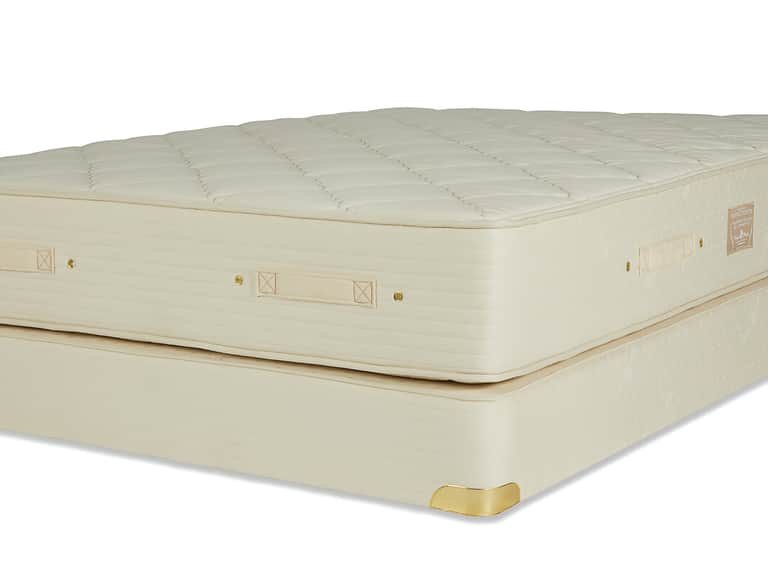
The model name does not establish what is inside the mattress. When evaluating the Vispring Diamond Majesty, seek a current specification sheet for the exact model and size. Confirm the materials and layers, the overall height, the construction method, and any differences between versions. If a detail is important to your decision, ask for it in writing rather than relying on a general description or an assumption based on the brand’s wider range.
A clear product explanation should help you understand how the mattress is assembled and what each component is intended to do. It should distinguish between the comfort surface and the supporting structure, identify materials accurately, and explain any options that affect feel or fit. If terminology is unfamiliar, ask for plain-language clarification. “Hand-finished,” “natural” or “premium” may describe aspects of a product, but on their own those terms do not tell you how it will feel, how it will perform, or what it requires from the rest of the bed.
Be especially careful with details that may differ from one listing to another. Retail descriptions can be incomplete, outdated or written for a broader model family. Check the product’s current specifications through an authoritative seller or manufacturer source, confirm the exact model name, and note the date of the information. If a salesperson gives you a construction or material detail that does not appear in the documentation, ask them to confirm it. Good evaluation depends on knowing what is being evaluated.
Construction is meaningful, but it is not a shortcut to comfort. A particular material does not automatically make a mattress right for every body, and a complex design does not remove the need for a personal assessment. Treat specifications as evidence about what the mattress is, then treat your own comfort as evidence about how it works for you.
Make the bed base part of the decision
A mattress does not operate in isolation. The base or foundation underneath it can affect the feel of the completed bed, provide essential support and determine whether the setup complies with the manufacturer’s requirements. Before choosing the Vispring Diamond Majesty, identify the exact support system you plan to use: an existing foundation, a slatted frame, a platform bed or another base. Then verify that the proposed combination is approved and appropriate for the mattress.
Do not assume that every mattress works on every frame simply because the dimensions match. Ask about required support, spacing or other base specifications, and whether a particular foundation is recommended. If you have an adjustable base, confirm compatibility for the exact mattress version. A showroom setup may use a different foundation from the one in your home, so ask what is beneath the display model and whether that changes how it feels.
The frame also shapes the practical experience of living with the bed. Measure the room, the doorway and any stair or elevator route that a delivery team must navigate. Check the mattress’s dimensions and height, and consider the combined height of the frame, foundation and bedding. In a New York apartment—where narrow halls, compact rooms and elevator schedules can be part of the furniture—delivery logistics deserve attention before the mattress arrives, not after.
Pay attention during an in-person trial
If you can try the mattress in person, give the test more than a hurried sit at the edge. Lie down in your usual sleeping positions for long enough to notice how your shoulders, hips and back feel. Let your body settle. Shift positions. If you share the bed, test it together where possible. The question is not whether the mattress feels impressive in the abstract; it is whether you can relax on it without becoming preoccupied with pressure, imbalance or discomfort.
Use straightforward observations rather than trying to score every sensation. Does the surface feel more yielding or more resilient than you expected? Do you feel supported in the areas that matter to you? Can you change position comfortably? Does the mattress seem stable when your partner moves? The answers do not predict every night, but they make the showroom visit more useful than a quick impression based on touch or appearance.
Ask whether the displayed mattress is the precise Diamond Majesty model and whether it matches the size and configuration you would order. If it does not, ask what differs. Also learn how long a trial or exchange period lasts, whether fees apply, what condition the mattress must be in, and how a return or replacement is arranged. A policy is only useful if you understand its limits before committing.
Consider the complete sleep setup
A mattress can only be judged fairly as part of a complete sleep environment. Bedding changes the immediate feel of the surface and contributes to temperature and moisture comfort. A thick topper, mattress pad or tightly fitted sheet may alter the experience you noticed in a showroom. If you already know which layers you intend to use, tell the person helping you and ask how those layers could affect the final setup.
Sheet fit is a small detail with outsized consequences. Confirm the mattress’s height and the depth of the fitted sheet you plan to use, including any topper or pad. A sheet that is too shallow may pull loose; one that is much too deep can bunch. Material and weave influence feel, too. Percale tends to feel crisp, while sateen is generally smoother; linen offers a different texture and drape. These are preferences, not promises about sleep quality, and the best choice depends on your own comfort and the room’s climate.
Pillows belong in the same calculation. Their loft and firmness influence how the head and neck feel in relation to the sleeping surface, particularly when changing mattress firmness or sleeping position. If you test a mattress with a pillow unlike the one you use at home, your impression may not reflect your usual setup. Bring your own pillow if practical, or at least note the difference when interpreting the trial.
Room conditions matter as well. Temperature, ventilation, light and sound can shape the quality of rest, even when the bed itself is comfortable. Urban bedrooms may face street noise, seasonal temperature swings or limited control over building systems. A mattress cannot solve all of those conditions. Consider blackout solutions, room-darkening routines, noise management and a comfortable temperature alongside the mattress decision. Luxury in a sleep environment is not only a material choice; it is the absence of avoidable friction.
Ask the questions that protect the investment
A high-end mattress is a substantial purchase, so the transaction deserves the same scrutiny as the product. Get the final price in writing and clarify what it includes: delivery, setup, removal of an old mattress, taxes, foundation or frame, and any optional services. Confirm expected lead time and what happens if the delivery date changes. If the mattress is made to order or has configuration choices, ask how those choices affect production, cancellation or return terms.
Read the warranty as a document, not a symbol of reassurance. Check its duration, what defects it covers, what conditions could affect coverage and how a claim is assessed. Understand the difference between normal changes in comfort and a covered manufacturing issue. Keep the receipt, product specification, delivery record and any written answers about compatibility or care. These records can make later questions easier to resolve.
Care instructions are another part of the cost of ownership. Ask whether the mattress needs to be rotated, whether it can be flipped, how to manage spills, and what kinds of protectors are recommended or permitted. Do not assume that familiar advice applies to every construction. Follow the current instructions for the precise model. A breathable protector may preserve the surface from everyday wear, but its material and fit should be compatible with the mattress and your preferences.
A disciplined comparison beats a luxury label
The Vispring Diamond Majesty may invite comparisons with other premium mattresses, but those comparisons are useful only when the criteria are clear. Put models side by side on the points that matter to you: how they feel in your normal sleeping positions, what their current specifications confirm, what base they require, how they respond to movement, what care they need and what the purchase terms allow. Avoid comparing a verified construction detail on one model with a vague marketing phrase on another.
Price should be part of that assessment, but not its only measure. A higher cost does not establish a better personal fit, just as a lower price does not automatically mean an inferior experience. Consider the complete setup and the likely practical lifespan of the purchase, while resisting claims that cannot be substantiated. The relevant question is not whether a mattress is expensive enough to count as luxury. It is whether its verified features, feel and terms justify its place in your bedroom and budget.
A final checklist before deciding
Before ordering, make sure you can answer the following questions clearly:
- Have I confirmed the exact model, size and current specifications from a reliable source?
- Have I tried the mattress in my usual sleeping positions, or learned the details of the available trial policy?
- Does its feel suit my comfort preferences, body and sleeping habits?
- Is my bed base compatible, and does it meet the manufacturer’s support requirements?
- Have I considered how pillows, sheets, pads or toppers will change the finished sleep surface?
- Do I understand delivery, setup, removal, return, warranty and care terms?
- Will the mattress fit through the route into my home and work with the room’s dimensions?
The useful answer is the specific one
The name Vispring Diamond Majesty may signal a place in the luxury mattress conversation, but the decision itself is intensely personal and practical. The strongest evaluation begins with the sleeper, verifies the construction, tests the feel and checks the base. It then accounts for bedding, room climate, delivery realities and the fine print that follows a purchase home.
That method is less dramatic than choosing by reputation. It is also more likely to produce a bed that makes sense after the showroom lights have faded. Ask for current facts. Take your time with the feel. Make the complete sleep setup part of the judgment. A mattress earns consideration not because its name promises a better night, but because the evidence—and your experience—suggest it may deliver one for you.